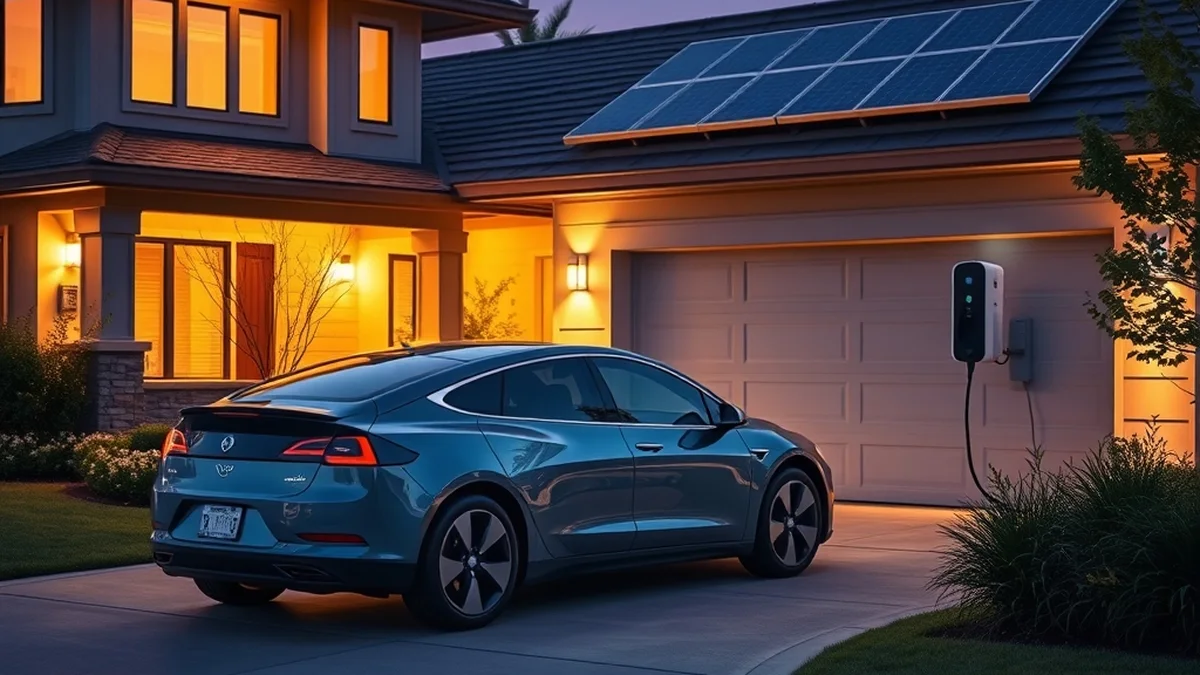
Bidirectional EV Chargers: Transforming Vehicles Into Home Batteries
Bidirectional EV chargers (V2H) enable electric vehicles to function as backup batteries for homes, offering a practical solution for energy resilience. While upfront costs can be significant, the long-term payback through savings on energy bills and potential incentives can make V2H systems financially viable. Understanding compatibility with local grids and insurance implications is crucial for maximizing benefits.
Understanding the Economics of Bidirectional Charging Systems
Bidirectional EV chargers allow electric vehicles (EVs) to not only draw power from the grid but also send power back to the home. This capability can significantly alter the economics of energy consumption and storage. The initial investment for a V2H system typically ranges from $1,000 to $5,000, depending on the model and installation complexity. However, the total cost of ownership can be offset by savings on electricity bills, especially during peak pricing hours.
For instance, if a household uses a V2H system to draw energy from their EV during peak hours, they could save approximately 20-30% on their monthly energy costs. Additionally, some states offer rebates or tax credits for installing renewable energy systems, which can further reduce the effective cost. A detailed ROI analysis can help homeowners understand the financial implications over the lifespan of both the charger and the vehicle.
| Cost Component | Estimated Cost |
|---|---|
| Bidirectional Charger | $1,000 – $5,000 |
| Installation | $500 – $2,000 |
| Potential Savings (Annual) | $300 – $600 |
| Incentives (State/Federal) | Up to $2,500 |
Evaluating Climate and Grid Compatibility
Before investing in a V2H system, homeowners must assess their local climate and grid compatibility. Not all regions have the same energy demands or grid capabilities, which can affect the performance of a bidirectional charger. For example, areas prone to extreme weather may benefit more from V2H systems as a backup power source during outages.
Moreover, the compatibility of the EV with local grid systems is crucial. Some utilities offer special rates for EV owners, and understanding these can enhance the economic viability of a V2H system. Homeowners should inquire about their utility’s policies regarding net metering and demand response programs, which can provide additional savings and incentives. For instance, a homeowner in California may find that their utility offers time-of-use rates that align perfectly with the capabilities of a V2H charger.
Insurance and Tax Incentives for V2H Systems
Insurance considerations play a significant role in the decision to install a V2H system. Homeowners should consult with their insurance providers to understand how a bidirectional charging system may impact their coverage. Some insurers may offer discounts for homes equipped with renewable energy systems, while others may require additional coverage for the EV used as a power source.
Tax incentives can also significantly influence the financial landscape for V2H systems. The federal government offers tax credits for electric vehicle purchases, which can be as high as $7,500, depending on the vehicle’s battery capacity. Additionally, various states provide their own incentives, which can range from rebates to tax deductions. Homeowners should research local and federal programs to maximize their savings. For example, a homeowner in New York could potentially receive a state rebate of up to $2,000 for installing a V2H system, alongside federal credits.
Key Questions for Evaluating Installer Qualifications
Choosing the right installer for a V2H system is crucial for ensuring optimal performance and safety. Homeowners should ask potential installers specific questions to gauge their expertise and reliability. Key inquiries include:
- What certifications do you hold for installing EV charging systems?
- Can you provide references from previous V2H installations?
- What is your experience with the specific EV model I own?
- Do you offer warranties or guarantees on your work?
- How do you handle potential upgrades or changes in technology?
Additionally, it’s advisable to request a detailed estimate that outlines all costs, including installation, permits, and any potential modifications to the home’s electrical system. This transparency can help homeowners avoid unexpected expenses and ensure that their investment is sound.
Related Purple Lab Briefings: Explore deeper benchmarks in Solar Microinverters vs String Inverters: Shade Tolerance Explained and Smart Ultrasonic Water Shutoff Valves Offer Savings and Insurance Discounts.
Comparative Analysis of V2H Systems and Traditional Backup Solutions
When comparing V2H systems to traditional backup power solutions, such as generators or battery storage systems, several factors come into play. V2H systems offer the unique advantage of utilizing an existing asset—the EV—while traditional systems require separate purchases and maintenance. For example, a conventional home generator may cost between $5,000 and $15,000, plus ongoing fuel and maintenance costs.
In contrast, the total cost of ownership for a V2H system can be significantly lower over time. While the upfront costs may be comparable, the operational costs of a generator (fuel, maintenance, and noise) can outweigh those of a V2H system, which primarily relies on the vehicle’s battery. The following table summarizes key differences:
| Feature | V2H System | Traditional Generator |
|---|---|---|
| Initial Cost | $1,500 – $7,000 | $5,000 – $15,000 |
| Fuel Source | Battery Electric | Gasoline/Diesel |
| Maintenance | Low | Moderate to High |
| Noise Level | Silent | Moderate to High |
| Environmental Impact | Low | High |
Pairing lifecycle cost math with federal efficiency incentives unlocks measurable long-term household savings.