Wi-Fi 7 Tri-Band Mesh Routers vs. Zero-Trust VLANs for Home Networks
Wi-Fi 7 tri-band mesh routers combined with zero-trust VLAN segmentation address the growing need for robust home network security and performance. These technologies mitigate risks from increased device connectivity while enhancing bandwidth management, benefiting tech-savvy consumers and families with multiple devices. However, they require careful setup and understanding of network architecture.
Understanding Wi-Fi 7 Architecture and Tri-Band Functionality
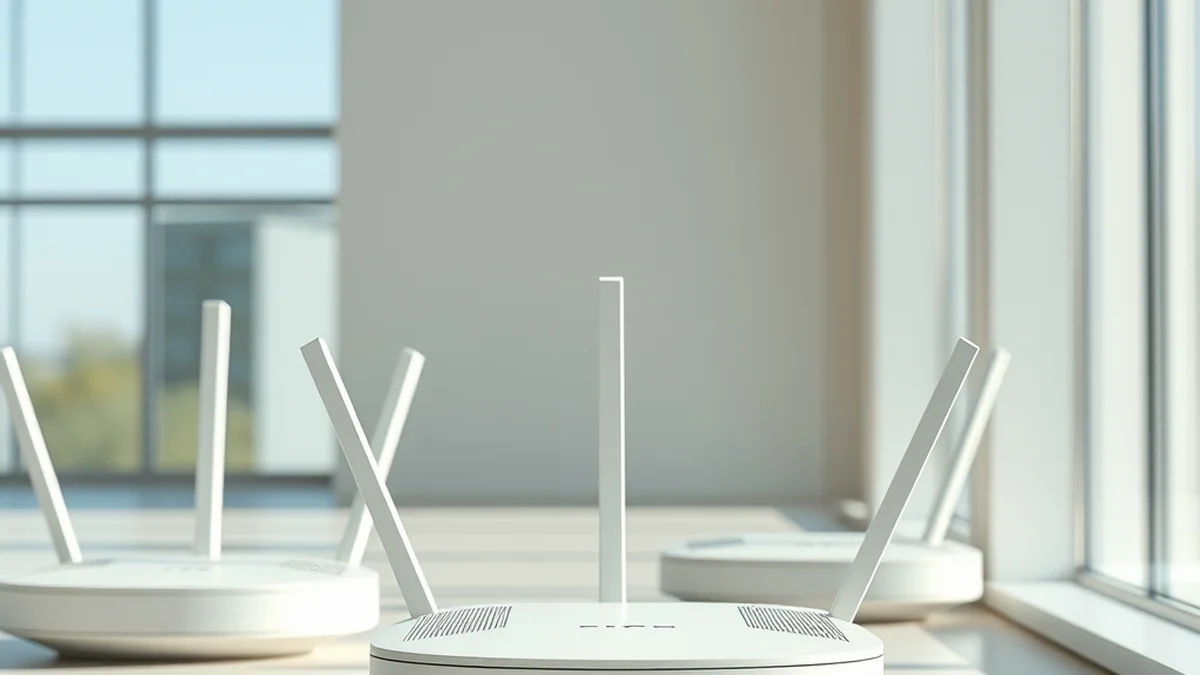
Wi-Fi 7, or 802.11be, represents the latest evolution in wireless networking, promising significant improvements in speed, capacity, and efficiency. Operating in the 2.4 GHz, 5 GHz, and 6 GHz bands, Wi-Fi 7 tri-band routers can handle multiple high-bandwidth applications simultaneously, such as 4K streaming, online gaming, and video conferencing, without noticeable lag. This tri-band capability allows routers to distribute traffic more effectively across devices, reducing congestion and improving overall network performance.
One of the standout features of Wi-Fi 7 is its use of Multi-Link Operation (MLO), which enables devices to transmit and receive data across multiple bands simultaneously. For instance, a smart TV and a gaming console can operate on different bands, ensuring that the bandwidth-intensive activities do not interfere with each other. This is particularly beneficial in households with numerous smart devices, where traditional dual-band routers may struggle to maintain optimal performance.
Zero-Trust VLAN Segmentation: Enhancing Security in Home Networks
Zero-trust VLAN segmentation is a security architecture that assumes no device or user can be trusted by default, regardless of whether they are inside or outside the network perimeter. This approach is increasingly relevant as home networks become more complex, with a growing number of Internet of Things (IoT) devices that can introduce vulnerabilities. By segmenting the network into different VLANs (Virtual Local Area Networks), users can isolate devices based on their function or security requirements. For example, smart home devices can be placed on a separate VLAN from personal computers, minimizing the risk of a compromised IoT device affecting critical systems.
Implementing zero-trust VLAN segmentation requires a router that supports advanced networking features. Many modern Wi-Fi 7 tri-band mesh routers come equipped with this capability, allowing users to create distinct VLANs for various device categories. This not only enhances security but also simplifies network management. Users can prioritize bandwidth for critical devices while restricting access to less secure devices, creating a more resilient home network environment.
Real-World Latency and Privacy Trade-Offs
While Wi-Fi 7 tri-band routers offer significant performance improvements, users must consider the potential trade-offs in latency and privacy. The introduction of multiple bands and advanced features like MLO can lead to increased complexity in network management. For instance, devices may experience latency if they switch between bands frequently or if the router’s load balancing isn’t optimized. This is particularly relevant in environments with many devices, where the router must constantly manage traffic across different bands.
Privacy concerns also arise with the implementation of advanced networking technologies. As more devices connect to the home network, the potential for data breaches increases. Zero-trust VLAN segmentation mitigates this risk by isolating devices, but users must remain vigilant about securing their network. Regular firmware updates, strong passwords, and monitoring network traffic are essential practices to maintain privacy and security. For example, a home user might implement a VLAN for smart cameras, ensuring that any potential breach does not compromise personal computers or mobile devices.
Hardware vs. Cloud Economics in Home Networking
The choice between hardware-based solutions and cloud-managed services is a critical consideration for consumers investing in Wi-Fi 7 tri-band mesh routers and zero-trust VLAN segmentation. Hardware solutions offer greater control and customization, allowing users to configure their networks according to specific needs. For instance, a tech-savvy user might prefer a hardware-based router that supports advanced features like VLANs and QoS (Quality of Service) settings, enabling precise management of bandwidth allocation.
On the other hand, cloud-managed services can simplify network management for less technical users. These services often come with user-friendly interfaces and automated updates, making it easier to maintain security and performance. However, they may involve ongoing subscription costs and potential privacy concerns related to data storage and management in the cloud. A consumer must weigh these factors carefully, considering their technical proficiency and willingness to invest in hardware versus the convenience of cloud solutions.
Related Purple Lab Briefings: Explore deeper benchmarks in Gallium Nitride (GaN) Fast-Charging Bricks: Safety and Design Insights and Local AI Voice Assistants and Edge NPUs: Smart Home Audio Unplugged.
Deployment Checklist for Wi-Fi 7 and VLAN Segmentation
Successfully deploying a Wi-Fi 7 tri-band mesh router with zero-trust VLAN segmentation requires careful planning and execution. Below is a checklist to guide consumers through the process:
- Assess Network Needs: Determine the number of devices, types of applications, and required bandwidth.
- Select Compatible Hardware: Choose a Wi-Fi 7 tri-band mesh router that supports VLAN segmentation.
- Plan VLAN Structure: Define how devices will be segmented based on function and security requirements.
- Configure Router Settings: Set up VLANs, SSIDs, and security protocols according to best practices.
- Monitor and Optimize: Regularly review network performance and security settings to adapt to changing needs.
By following this checklist, consumers can ensure that their home networks are not only efficient but also secure against emerging threats. The combination of Wi-Fi 7 and zero-trust VLAN segmentation offers a powerful solution for modern home networking challenges, but it requires a proactive approach to deployment and management.
Prioritizing local control, open security standards, and repairable hardware keeps consumer tech working for you.