Gallium Nitride (GaN) Fast-Charging Bricks: Safety and Design Insights
Gallium Nitride (GaN) fast-charging bricks address the growing demand for efficient, compact power solutions in an era where rapid charging is essential. While they significantly reduce charging times and heat generation, potential safety concerns and compatibility issues remain. Consumers who frequently use multiple devices will find GaN technology particularly beneficial.
Understanding Gallium Nitride Technology
Gallium Nitride is a semiconductor material that has emerged as a superior alternative to silicon in power electronics. GaN devices can operate at higher voltages, frequencies, and temperatures, which translates to smaller, more efficient chargers. For instance, a typical silicon charger may be limited to around 85% efficiency, while GaN chargers can exceed 90%, minimizing wasted energy and heat generation. This efficiency is crucial for fast-charging applications, where rapid energy transfer is required without overheating.
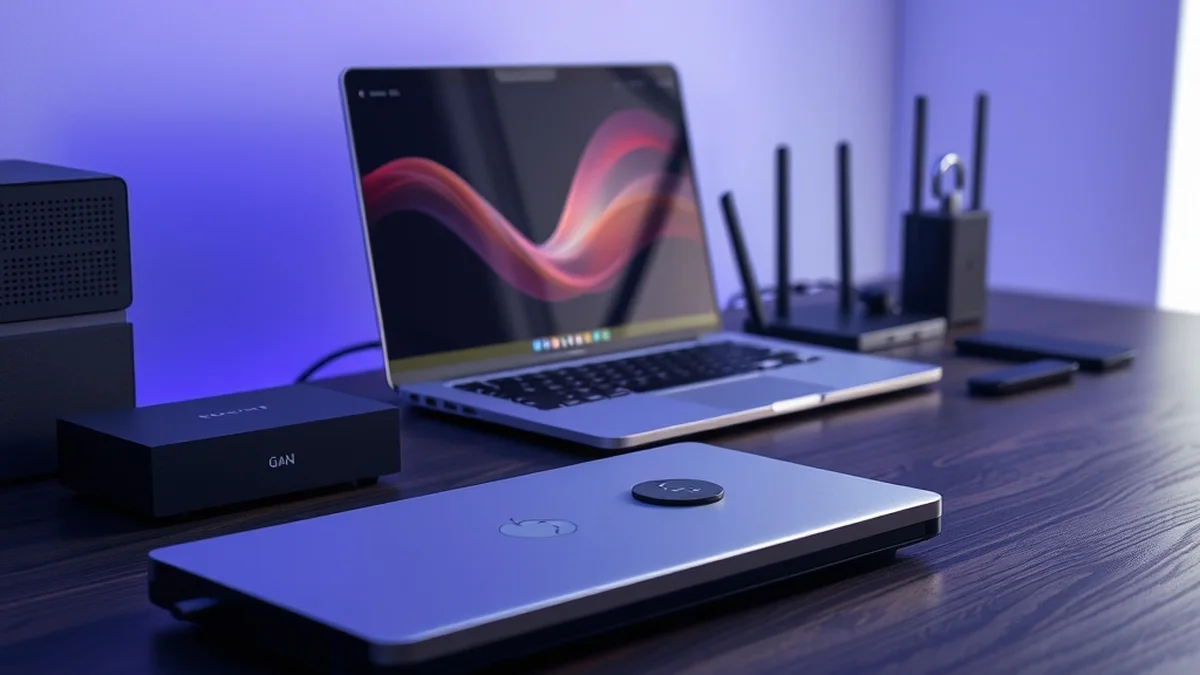
GaN technology allows for the integration of multiple charging ports in a compact form factor. A 65W GaN charger can often charge multiple devices simultaneously, such as a laptop and a smartphone, without compromising performance. This is particularly advantageous for users with multiple devices, as it reduces the need for multiple chargers and outlets.
Thermal Management and Safety Considerations
One of the primary advantages of GaN technology is its superior thermal management. GaN chargers generate less heat than their silicon counterparts, which is critical for maintaining battery health and safety. Traditional chargers can become hot during operation, risking damage to both the charger and the device being charged. GaN chargers, however, can maintain lower operating temperatures, which enhances safety and prolongs the lifespan of both the charger and the battery.
Despite these benefits, safety concerns still exist. GaN devices require careful thermal engineering to ensure that they do not exceed their operational limits. Overheating can lead to thermal runaway in batteries, a condition where increased temperature causes a battery to generate even more heat, potentially leading to fires or explosions. Manufacturers must implement robust thermal management systems, including heat sinks and thermal cut-off switches, to mitigate these risks.
Real-World Performance: Latency and Privacy Trade-offs
While GaN chargers excel in efficiency, real-world performance can vary based on several factors, including device compatibility and charging protocols. For example, devices that support Power Delivery (PD) can take full advantage of GaN’s capabilities, achieving maximum charging speeds. However, devices without PD support may charge at significantly lower rates, negating the benefits of a GaN charger.
Moreover, the integration of smart technology in chargers raises privacy concerns. Many modern chargers come equipped with features that allow them to communicate with devices to optimize charging speeds. This communication can introduce vulnerabilities, as data exchanged between the charger and device could potentially be intercepted. Users must weigh the convenience of fast charging against the potential risks associated with data privacy and security.
Hardware vs. Cloud Economics in Fast-Charging Solutions
The economics of GaN technology also presents an interesting landscape. On one hand, the initial cost of GaN chargers can be higher than traditional silicon chargers. However, the long-term savings associated with energy efficiency, reduced heat generation, and device longevity can offset these upfront costs. For example, a GaN charger may cost $50 compared to a $20 silicon charger, but the energy savings and reduced risk of device damage could lead to a net gain over time.
Additionally, as the demand for GaN technology increases, economies of scale may drive prices down, making these chargers more accessible to consumers. The shift toward GaN could also influence the broader market for charging solutions, prompting manufacturers to invest in more efficient technologies and potentially phasing out less efficient options.
Related Purple Lab Briefings: Explore deeper benchmarks in Explore LiFePO4 Solid-State Power Stations for Home Backup Solutions and Tandem OLED vs Mini-LED PWM Dimming: Eye Strain Solutions for Deep Work.
Deployment Checklist for GaN Chargers
When considering the adoption of GaN fast-charging bricks, consumers should follow a structured checklist to ensure compatibility and safety:
- Device Compatibility: Verify that your devices support fast charging protocols like Power Delivery.
- Heat Management: Look for chargers with built-in thermal management features, such as heat sinks or thermal cut-off switches.
- Brand Reputation: Choose reputable brands known for quality and safety standards in electronics.
- Warranty and Support: Ensure the charger comes with a warranty and customer support for troubleshooting.
- Energy Efficiency Ratings: Check for efficiency ratings to gauge the charger’s performance.
| Feature | GaN Charger | Silicon Charger |
|---|---|---|
| Efficiency | 90%+ | 85% max |
| Heat Generation | Low | High |
| Size | Compact | Bulkier |
| Charging Speed | Fast (up to 65W) | Standard (up to 30W) |
| Cost | Higher initial | Lower initial |
As the landscape of consumer technology continues to evolve, GaN fast-charging bricks represent a significant advancement in power delivery. By prioritizing thermal management and safety, consumers can enjoy the benefits of rapid charging while minimizing risks. However, careful consideration of device compatibility and potential privacy issues is essential to fully leverage this technology.
Prioritizing local control, open security standards, and repairable hardware keeps consumer tech working for you.