Local AI Voice Assistants and Edge NPUs: Smart Home Audio Unplugged
Local AI voice assistants and edge NPUs address significant privacy and latency concerns associated with cloud-based systems. By processing commands and data locally, users benefit from enhanced responsiveness and greater control over their personal information, reducing reliance on external servers and mitigating potential data breaches.
Understanding Local AI Voice Assistants
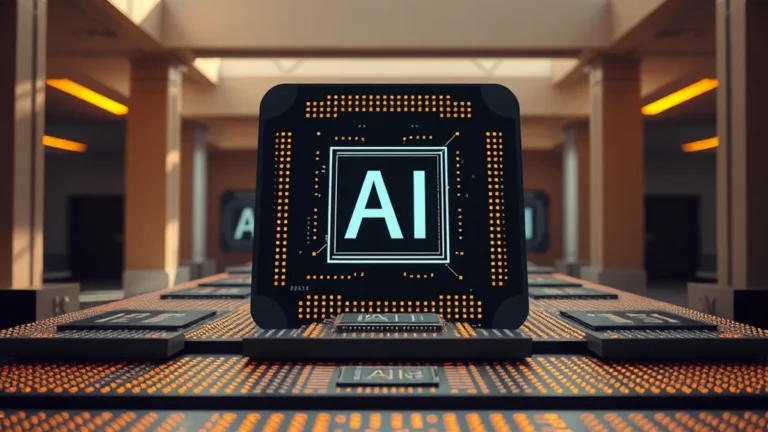
Local AI voice assistants operate on devices equipped with edge neural processing units (NPUs), allowing them to perform tasks without sending data to the cloud. This architecture is particularly beneficial for smart home devices, where immediate responsiveness is critical. For example, a local assistant can control lighting or thermostat settings almost instantaneously, providing a seamless user experience. Unlike traditional cloud-based systems, which require internet connectivity and can suffer from latency, local AI solutions ensure that commands are executed in real-time, enhancing user satisfaction.
Latency and Privacy Trade-offs
One of the primary advantages of local AI voice assistants is the reduction in latency. Cloud-based systems often experience delays due to the time taken for data transmission and processing. In contrast, local processing allows for immediate feedback. Research indicates that local systems can achieve response times as low as 50 milliseconds, compared to upwards of 200 milliseconds for cloud solutions. This speed is crucial for applications requiring rapid interaction, such as home security systems that need to react instantly to alarms.
Privacy is another critical factor. With local processing, sensitive data remains on the device, minimizing exposure to potential breaches. This is particularly relevant in an era where data privacy concerns are paramount. Users can have peace of mind knowing that their voice commands and personal information are not being transmitted over the internet, significantly reducing the risk of unauthorized access.
Economic Considerations: Hardware vs. Cloud
When evaluating the economic implications of local AI voice assistants versus cloud-based solutions, several factors come into play. Cloud services typically charge based on usage, which can lead to escalating costs as more devices are added or as usage increases. In contrast, local systems require an upfront investment in hardware but can lead to long-term savings by eliminating ongoing subscription fees. For instance, a smart home equipped with local AI might only incur initial costs for the devices and occasional maintenance, whereas a cloud-dependent system could result in monthly fees that accumulate over time.
Additionally, the cost of edge NPUs has been decreasing, making them more accessible for consumer devices. As manufacturers increasingly integrate these processors into smart home products, the initial investment becomes more justifiable. Consider a scenario where a homeowner opts for a local AI system with a one-time cost of $300 for a smart speaker versus a cloud-based solution that charges $10 monthly. Over three years, the local solution would save the user $120, not accounting for potential price increases in cloud services.
Deployment Checklist for Local AI Voice Assistants
Implementing local AI voice assistants in a smart home environment requires careful planning and consideration. Here’s a checklist to guide consumers through the deployment process:
- Assess Compatibility: Ensure that existing smart home devices can integrate with local AI systems. Check for compatibility with edge NPUs.
- Choose the Right Hardware: Select devices that feature robust local processing capabilities. Look for specifications that highlight edge NPU integration.
- Evaluate Security Features: Prioritize devices that offer strong encryption and security protocols to protect local data.
- Plan for Updates: Ensure that the devices can receive firmware updates to enhance functionality and security over time.
- Test Responsiveness: After installation, evaluate the system’s responsiveness to ensure it meets your expectations for speed and reliability.
| Feature | Local AI Voice Assistants | Cloud-Based Voice Assistants |
|---|---|---|
| Latency | 50 milliseconds | 200 milliseconds+ |
| Data Privacy | Data processed locally | Data sent to cloud servers |
| Cost Structure | One-time hardware cost | Recurring subscription fees |
| Dependency | Independent of internet | Requires constant internet connection |
| Scalability | Limited by hardware | Scalable with additional subscriptions |
Related Purple Lab Briefings: Explore deeper benchmarks in Revolutionizing Sound: AI Beamforming and Bone Conduction Wearables and FIDO2 Passkeys vs Physical Security Keys: Which is Best for Banking?.
Real-World Applications and User Benefits
The practical applications of local AI voice assistants extend beyond mere convenience. For instance, in smart home security, local processing allows for immediate alerts and actions without the delays associated with cloud communication. Homeowners can receive real-time notifications about security breaches and take action instantly, enhancing their overall safety.
Moreover, local AI voice assistants can facilitate personalized experiences. By analyzing user behavior locally, these systems can adapt to individual preferences without needing to send data to the cloud for analysis. This capability not only improves user satisfaction but also strengthens privacy, as personal habits remain confidential.
In areas with unreliable internet connectivity, local AI voice assistants shine. Users can maintain full functionality of their smart home systems without the constant need for an internet connection, ensuring that critical services remain operational even during outages. This resilience is particularly valuable in rural or underserved areas where internet access may be sporadic.
Prioritizing local control, open security standards, and repairable hardware keeps consumer tech working for you.