
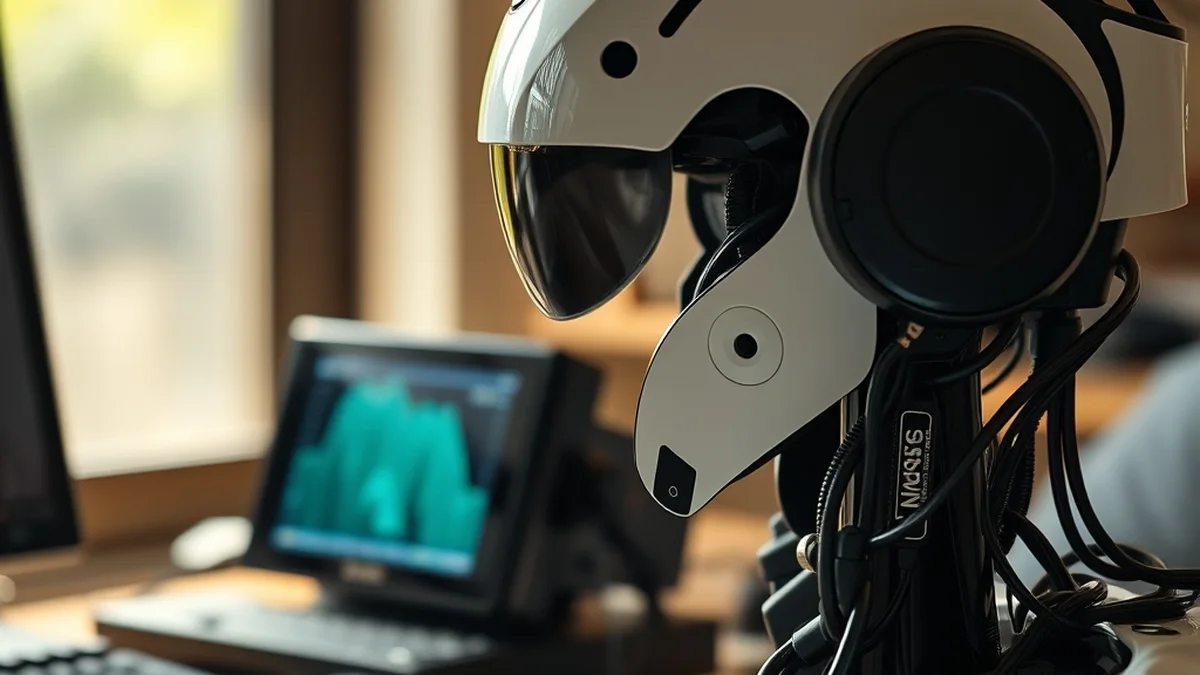
Meta’s Muse AI Agent Faces Early Safety Issues Amid Big Bets
Meta’s Muse AI agent aims to enhance user interaction by providing personalized assistance across various applications. However, early safety mishaps have raised concerns about privacy and data security, highlighting the need for careful deployment and user awareness. While tech enthusiasts and businesses may benefit from its capabilities, the potential risks cannot be overlooked.
Understanding Muse AI’s Architecture
The Muse AI agent operates on a sophisticated architecture that combines natural language processing (NLP), machine learning (ML), and cloud computing. At its core, Muse utilizes advanced NLP algorithms to understand and generate human-like responses. The architecture is designed to learn from user interactions, continuously improving its performance over time. However, this learning process requires vast amounts of data, which raises questions about data privacy and user consent.
Additionally, Muse’s architecture relies on a hybrid model that processes some tasks locally while offloading others to the cloud. This design aims to balance performance and resource efficiency. For instance, simple queries may be handled on-device, reducing latency, while more complex tasks are processed in the cloud. However, this dual approach can lead to inconsistencies in response times and user experience, especially if the cloud connection is unstable.
Real-World Latency and Privacy Trade-Offs
One of the most significant challenges with Muse AI is the trade-off between latency and privacy. When tasks are processed in the cloud, users may experience delays due to network latency, particularly in areas with poor connectivity. For example, a user attempting to access real-time information may find that the response time is slower than expected, leading to frustration and a diminished user experience.
On the privacy front, the reliance on cloud processing raises concerns about data security. User interactions with Muse are often stored and analyzed to improve the AI’s performance, which can lead to potential data breaches. A recent incident involving a data leak from a similar AI platform highlighted the risks associated with cloud-based processing. Users must weigh the convenience of a powerful AI assistant against the potential for their personal data to be compromised.
Hardware vs. Cloud Economics in AI Deployment
The economic implications of deploying Muse AI are significant, particularly when comparing hardware and cloud solutions. On one hand, investing in robust hardware can enhance the performance of AI applications by enabling local processing. This approach minimizes latency and reduces reliance on external servers, which can be particularly beneficial for users in remote areas with limited internet access.
On the other hand, cloud-based solutions offer scalability and flexibility, allowing businesses to adjust their resources based on demand. For instance, a startup may opt for cloud services to avoid the upfront costs of hardware acquisition. However, ongoing subscription fees and potential data transfer costs can accumulate over time, making cloud solutions less economical in the long run. A careful analysis of these factors is essential for businesses considering the deployment of Muse AI.
Deployment Checklist for Safe Implementation
To ensure a smooth and secure deployment of Muse AI, users and businesses should follow a comprehensive checklist. First, assess the specific use cases for the AI agent. Understanding the intended applications will help determine whether local processing or cloud solutions are more appropriate. For example, applications requiring real-time responses may benefit from local processing, while those that rely on extensive data analysis may be better suited for cloud solutions.
Next, prioritize data privacy by implementing strong security measures. This includes encrypting data both in transit and at rest, as well as ensuring that user consent is obtained before collecting any personal information. Additionally, regularly review and update security protocols to address emerging threats. Finally, consider user training and awareness programs to educate users about the potential risks associated with AI technologies and best practices for safe usage.
Related Purple Lab Briefings: Explore deeper benchmarks in Zero-Knowledge Encrypted Cloud Storage vs Self-Hosted NAS: Which is Best? and Tandem OLED vs Mini-LED PWM Dimming: Eye Strain Solutions for Deep Work.
Evaluating the Trade-Offs: A Comparative Table
| Feature | Local Processing | Cloud Processing |
|---|---|---|
| Latency | Low latency; faster response times | Higher latency; dependent on internet speed |
| Data Privacy | More secure; less data transmission | Higher risk; data stored on external servers |
| Cost | Higher upfront costs; lower ongoing expenses | Lower initial costs; ongoing subscription fees |
| Scalability | Limited by hardware capabilities | Highly scalable; resources can be adjusted |
As Meta continues to invest in the Muse AI agent, the balance between innovation and safety will be critical. Users must remain vigilant about the implications of adopting such technologies, particularly regarding privacy and security. By understanding the underlying architecture, latency and privacy trade-offs, and economic factors, consumers can make informed decisions about their engagement with AI solutions.
Prioritizing local control, open security standards, and repairable hardware keeps consumer tech working for you.